
UrgoStart® Contact
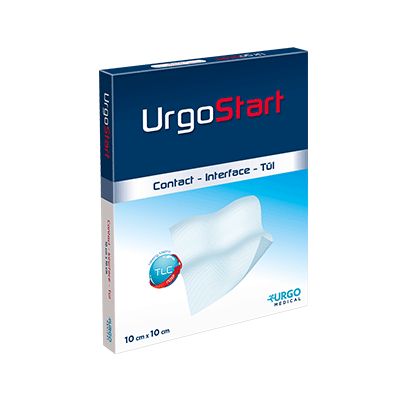
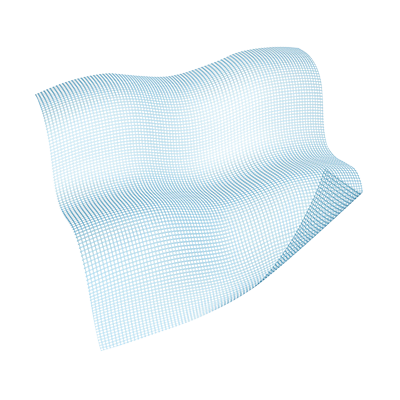
An innovative, non-adhesive, non-occlusive matrix with TLC-NOSF technology. It combines a polyester mesh with the TLC-NOSF formula.
FEATURES AND CLINICAL BENEFITS
| FEATURES | BENEFITS |
|---|---|
|
|
|
|
|
|
|
|
|
|
The efficacy of TLC-NOSF on the reduction of healing time has been demonstrated in double-blind, randomised controlled clinical studies 1,2,3 and by an analysis of observational studies4. The sooner you initiate UrgoStart treatment, the better The healing outcomes5
References
- Meaume S, et al. A randomized, controlled, double-blind prospective trial with a Lipido-Colloid Technology-Nano-Oligo Saccharide Factor wound dressing in the local management of venous leg ulcers. Wound Rep Reg. 2012; 20: 4, 500-511.
- Edmonds M, Lazaro-Martinez JL, Alfayate-Garcia JM, Martinin J, Petit JM, Rayman G, Lovmann R, Uccioli L, Sauvadet A, Bohbot S, Kerihuel JC, Piaggesi A. Sucrose octasulfate dressing versus control dressing in patients with neuroischaemic diabetic foot ulcers (Explorer): an international, multicentre, double-blind, randomised, controlled trial. Lancet Diabetes Endocrinol. 2018 Mar;6(3)186-196.
- Meaume S, Truchetet F, Cambazard F et al. A randomized, controlled, double-blind prospective trial with a Lipido-Colloid Technology-Nano-OligoSaccharide Factor wound dressing in the local management of venous leg ulcers. Wound Repair Regen. 2012;20:4, 500-511
- Munter KC, Meaume S, Augustin M, Senet P, Kerijuel JC. The reality of routine practice: a pooled data analysis on chronic wounds treated with TLC-NOSF wound dressings. J Wound care. 2017 Feb; 26 (sup2): S4-S15. Erratum in: J Wound Care. 2017 Mar 2; 26(3):153
- Lazaro et al . Optimal wound closure of diabetic foot ulcers with early initiation of TLC-NOSF treatment: post-hoc analysis of Explorer.JWC VOL 28, NO 6 , June 2019
INDICATIONS
UrgoStart® Contact is indicated for covering and treating the following skin wounds:
- Leg Ulcers
- Diabetic foot ulcers
- Pressure ulcers (bedsores)
- Other long-lasting or recurrent wounds or wounds at risk of long lasting.
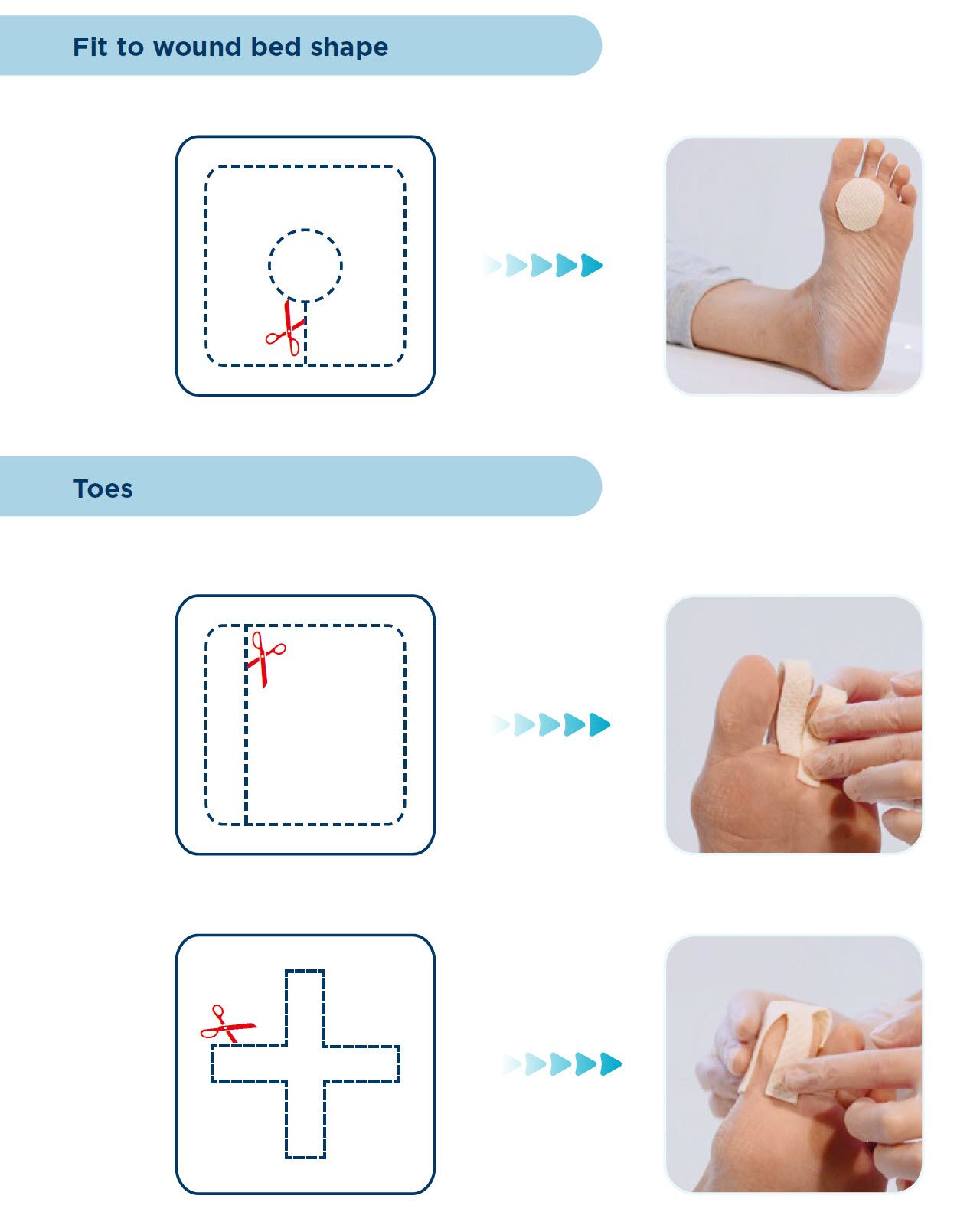
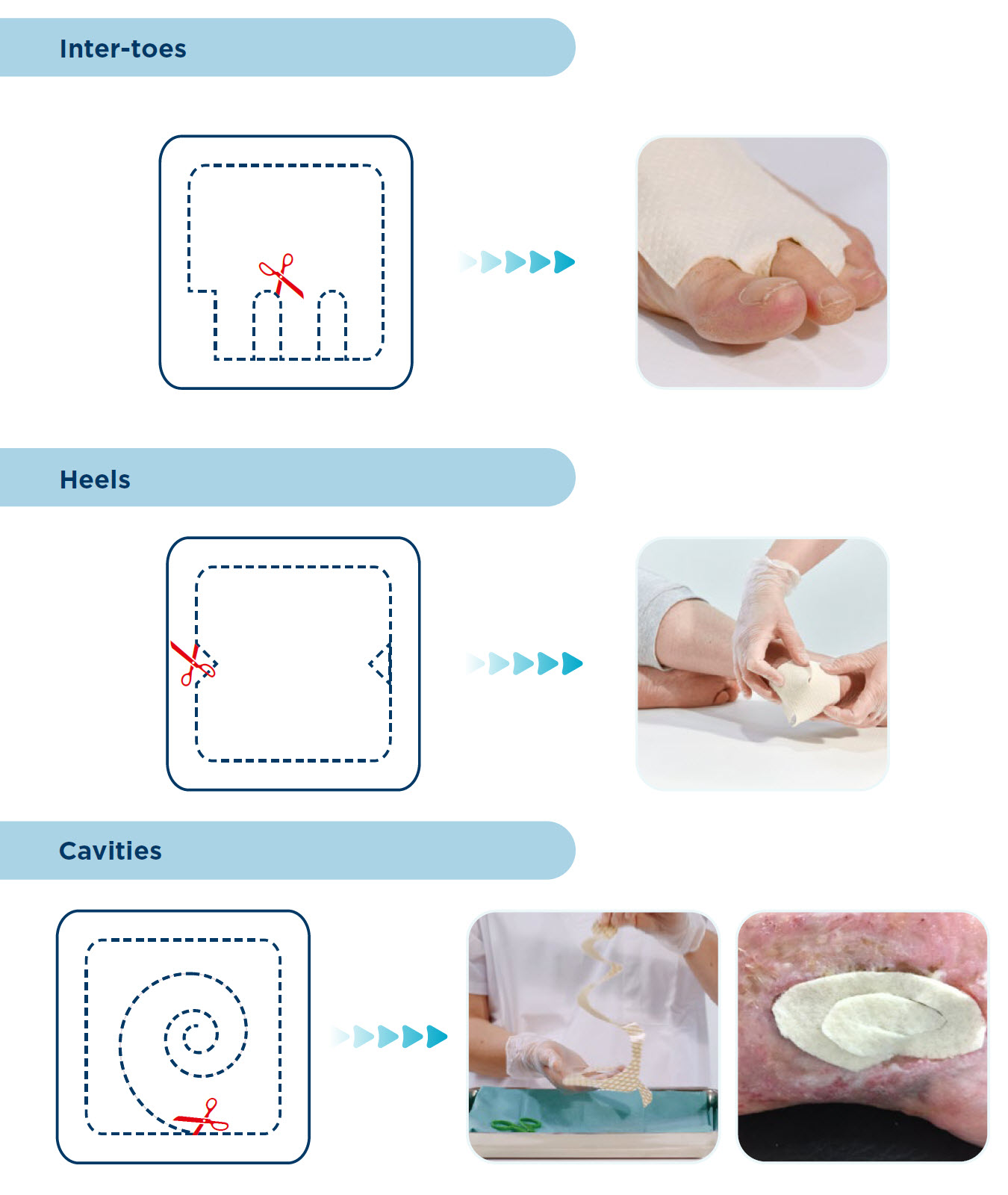
UrgoStart® Contact is also suitable for application to wounds with difficult skin localisation (for example, in the area of toes or over a bony prominence), or to hollow, cavity or deep wounds.
UrgoStart® Contactcan also be packed in deep wounds.
UrgoStart® Contactis intended for use on wounds mainly covered with granulation tissue (red tissue in the wound).
UrgoStart® Contact must be covered by an absorbent dressing suitable for the level of exudate (that is, to the amount of fluid appearing at the wound), and, when this absorbent dressing is not adhesive, also by a dressing securement system (for example, medical tape, flat or tubular mesh).
UrgoStart® Contact can be used in combination with a compression system when a compression therapy is prescribed, or with a foot offloading system.
CONTRAINDICATIONS
- Malignant wounds
- Fistula wounds
- Wounds on mucous membrane
- Epidermolysis bullosa wounds
- Known hypersensitivity of the patient to one of the TLC or TLC-NOSF dressings, or to carboxymethylcellulose (CMC).
CUTTING GUIDE
DIRECTIONS FOR USE
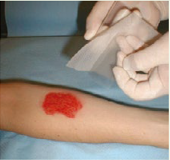
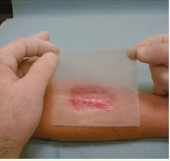
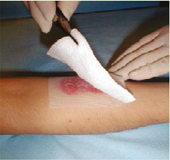
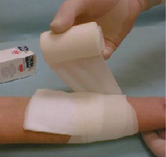
- UrgoStart® Contact adheres to latex surgical gloves. It is therefore recommended that gloves be moistened with saline in order to make the handling easier. Clean the wound as per local protocol.
- If antiseptic is first used, carefully rinse the wound with normal sterile saline before applying UrgoStart® Contact
- Dry the surrounding skin carefully
- Remove the protective wings
- Apply UrgoStart® Contact to the wound
- Cover UrgoStart® Contact with a secondary dressing suitable to absorb the level of wound exudate and hold the secondary dressing in place with a conforming bandage, adhesive tape or an elasticated tubular bandage
- For exuding wounds, use UrgoStart® Foam Pad
UrgoStart® Contact dressing may be changed every 2 to 4 days, and left in place for up to 7 days depending on the level of exudate and the wound condition.
PRODUCT OPTIONS
| Product Code | Product Size | Units/Box |
|---|---|---|
| 100379 | 5x7cm | 10 |
| 100380 | 10x10cm | 10 |
| 100381 | 15x20cm | 10 |
Supplied in boxes of 10 individually packed sterile dressings.
Disclaimer: The product codes published on this website are local reference codes used for ordering, tender, and administrative purposes. They are not the manufacturer's product codes and may differ from the product codes shown on the product label or packaging. The product specifications and intended use remain unchanged.
CLINICAL EVIDENCE
- Meaume S, et al. A randomized, controlled, double-blind prospective trial with a Lipido-Colloid Technology-Nano-Oligo Saccharide Factor wound dressing in the local management of venous leg ulcers. Wound Rep Reg. 2012; 20: 4, 500-511.
- Edmonds M, Lazaro-Martinez JL, Alfayate-Garcia JM, Martinin J, Petit JM, Rayman G, Lovmann R, Uccioli L, Sauvadet A, Bohbot S, Kerihuel JC, Piaggesi A. Sucrose octasulfate dressing versus control dressing in patients with neuroischaemic diabetic foot ulcers (Explorer): an international, multicentre, double-blind, randomised, controlled trial. Lancet Diabetes Endocrinol. 2018 Mar;6(3) 186-196.
- Meaume S, Truchetet F, Cambazard F et al. A randomized, controlled, double-blind prospective trial with a Lipido-Colloid Technology-Nano-OligoSaccharide Factor wound dressing in the local management of venous leg ulcers. Wound Repair Regen. 2012;20:4, 500-511
- Munter KC, Meaume S, Augustin M, Senet P, Kerijuel JC. The reality of routine practice: a pooled data analysis on chronic wounds treated with TLC-NOSF wound dressings. J Wound care. 2017 Feb; 26 (2):S4-S15. Erratum in: J Wound Care. 2017 Mar 2; 26(3):153
- Lazaro et al . Optimal wound closure of diabetic foot ulcers with early initiation of TLC-NOSF treatment: post-hoc analysis of Explorer.JWC VOL 28, NO 6 , June 2019
- Report to the French minister responsible for Social Security and the French Parliament concerning the evolution of French National Health Insurance charges and products for 2014.July 2013.