
UrgoK2® Lite
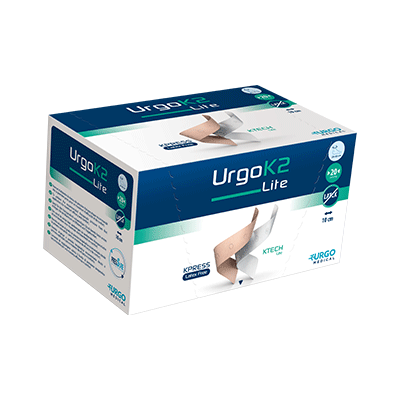
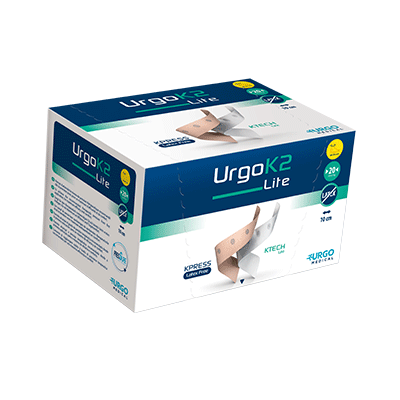
2-layer compression bandage system (reduced compression 20mmHg)
FEATURES AND CLINICAL BENEFITS
- UrgoK2® Lite is a multicomponent, compression system composed of:
- Layer 1 – K-TECH: white short-stretch bandage, provides compression, protection
- Layer 2 – Kpress: pink/beige, cohesive long-stretch bandage; provides the additional compression necessary to achieve the therapeutic pressure and secures the bandages in place.
- Multicomponent system guarantees ~20mmHg at the ankle at first application1
- Pressure and position maintained for up to 7 days2
- High level of patient comfort day and night3
- Hanna R. et al. A comparison of interface pressures of three compression bandage systems. British Journal of Nursing (2008) 17 (20): S16-S24.
- Jünger et al. Comparison of interface pressures of three compression bandaging systems used on healthy volunteers. J Wound Care (2009) 18(11): 474-80.
- Benigni J-P et al. Efficacy, safety and acceptability of a new two-layer bandage system for venous leg ulcers. J Wound Care (2007) 16 (9): 385-390.
INDICATIONS
- Treatment of venous or mixed leg ulcers and/or lower limb oedemas where a reduced level of compression is recommended, in adults.
CONTRAINDICATIONS
- Moderate or severe arterial conditions with Ankle Brachial Pressure Index (ABPI) <0.6.
- Patients suffering from ischaemic thrombosis, phlegmatia coerulea dolens, septic phlebitis.
- Decompensated congestive heart failure.
- Patient in post-arterial bypass condition.
- Known hypersensitivity to any of the components – in particular latex for URGO K2® Lite.
PRECAUTIONS
- Single use: do not wash to maintain the performances of the medical device.
- Do not sterilize.
- Do not use in direct contact with a wound.
- In the event of heart failure, diabetes, peripheral arterial disease, or peripheral neuropathy, use the compression system after specialist referral and under close medical monitoring.
- In case of ABP≥1.3, additional vascular assessment is recommended before initiating the compression therapy.
- In the event of ulceration or oedema caused by infection, use the compression system after specialist referral and under close medical monitoring.
- In case of infected peri-ulcer dermatitis, treat infection before beginning compression bandage therapy.
- The efficacy of URGO K2® Lite (or URGO K2® Lite Latex Free) has been tested and validated for the application of KTech Lite and KPress (or KPress Latex Free) together.
- Follow the application method given below to achieve the recommended therapeutic pressure. The PresSure System has been specifically designed to guide the application of the bandages.
- This compression system should be worn continuously day and night until the next care at the discretion of the clinician.
- If experiencing discomfort, pain or skin reactions whilst wearing this product, patient should contact his/her healthcare professional.
- Any serious incident linked to the product must be reported to the manufacturer and the National Competent Authority.
DIRECTIONS FOR USE
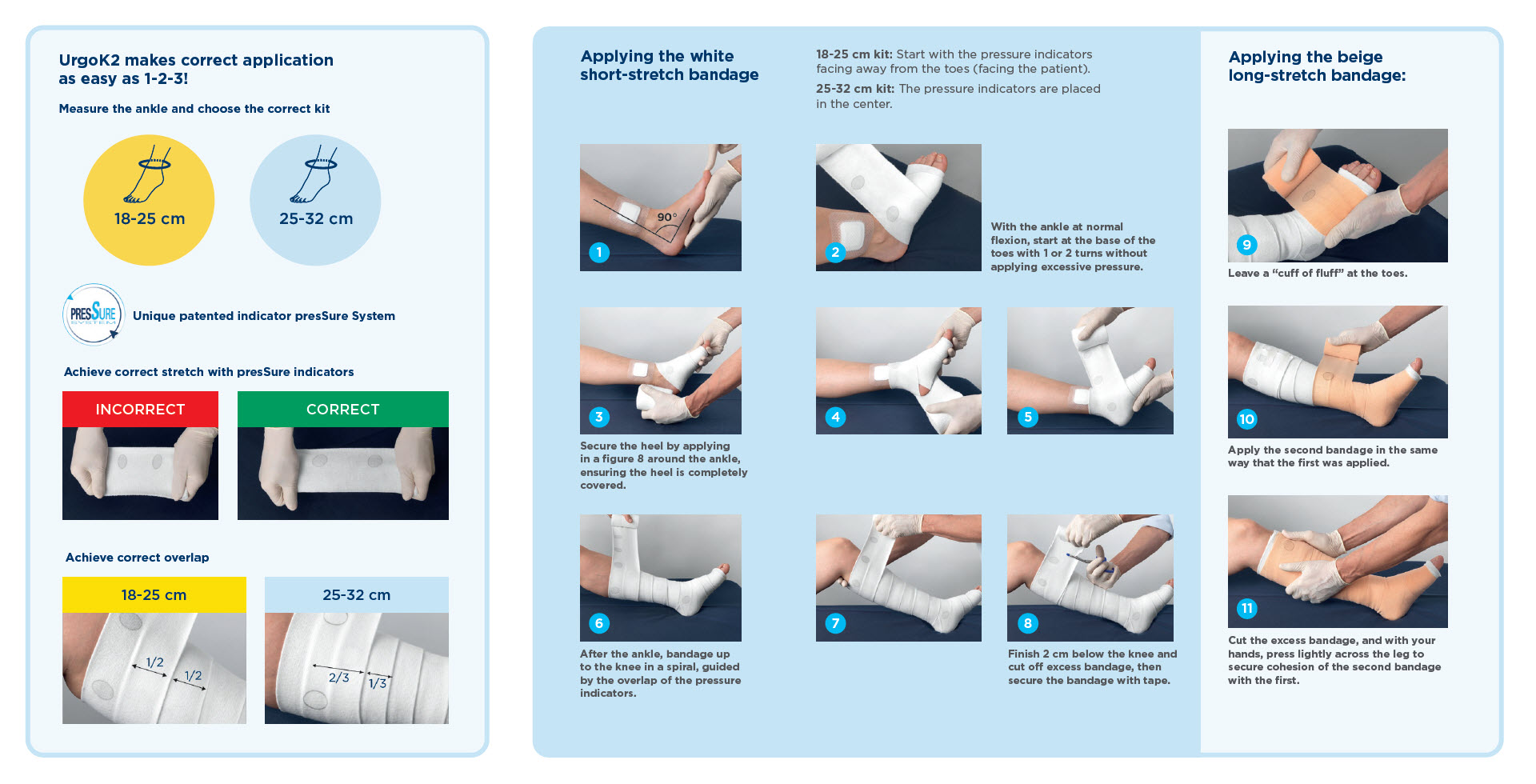
Please Note: Application for UrgoK2® Lite is the same as UrgoK2®
PRODUCT OPTIONS
| Product Code | Product Size | Units/Box |
|---|---|---|
| 100400 | Ankle 18-25CM | 1 kit |
| 100401 | Ankle 25-32CM | 1 kit |
Supplied in kits containing 2 components: 1 KTech + 1 KPress.
Disclaimer: The product codes published on this website are local reference codes used for ordering, tender, and administrative purposes. They are not the manufacturer's product codes and may differ from the product codes shown on the product label or packaging. The product specifications and intended use remain unchanged.
CLINICAL EVIDENCE
- Hanna R. et al. A comparison of interface pressures of three compression bandage systems. British Journal of Nursing (2008) 17 (20): S16-S24.
- Jünger et al. Comparison of interface pressures of three compression bandaging systems used on healthy volunteers. J Wound Care (2009) 18(11): 474-80.
- Benigni J-P et al. Efficacy, safety and acceptability of a new two-layer bandage system for venous leg ulcers. J Wound Care (2007) 16 (9): 385-390.
Page updated on 13 September 2026